Standards • Science • Solutions
Standards, science, and swimmer safety in the pool and spa industry — where the documents meet the job site.
Director of Science and Compliance, AquaStar Pool Products.
Chair, PHTA-16 (VGBA) Standard Writing Committee · Chair, PHTA Commercial Council · Voting member, ANSI/PHTA/ICC-2
Chaired the PHTA Standards Process Committee, 2005–2026
Who I am
I work on product compliance, safety standards research, and the development of products designed to make pools safer and more efficient. That work at AquaStar is my professional home and the foundation for everything else I do in this industry.
Beyond the company, I serve the standards community directly — chairing the committees that write and maintain the rules the industry runs on, and voting on the standards that govern how pools are built and operated. The standards exist for good reasons. The persistent challenge is making them practical, findable, and useful to the people doing the work.
In June 2026 I completed a twenty-one-year term chairing the committee that governs how this industry's standards get written. I took it up in August 2005, when it was the APSP Technical Committee — a body that began under NSPI and is now PHTA's Standards Process Committee. The organization's name changed, the committee's name changed, the work did not. That kind of continuity is most of what makes a standards process trustworthy.
What I work on
Nearly every problem I'm asked about comes down to the same thing: does the installed system actually do what the standard assumes it does? These are the areas where that question gets answered.
Moving water where it matters. Verifying flow, finding dead spots, and designing for turnover that actually turns the water over.
Clarity as a performance specification — filter loading, media selection, and how hydraulics govern what a filter can actually remove.
Right dose, right place, right time. Keeping disinfection effective and predictable while minimizing by-products.
PHTA and ICC standards, building codes, and the VGB Act — translated into decisions a builder, service pro, or inspector can act on.
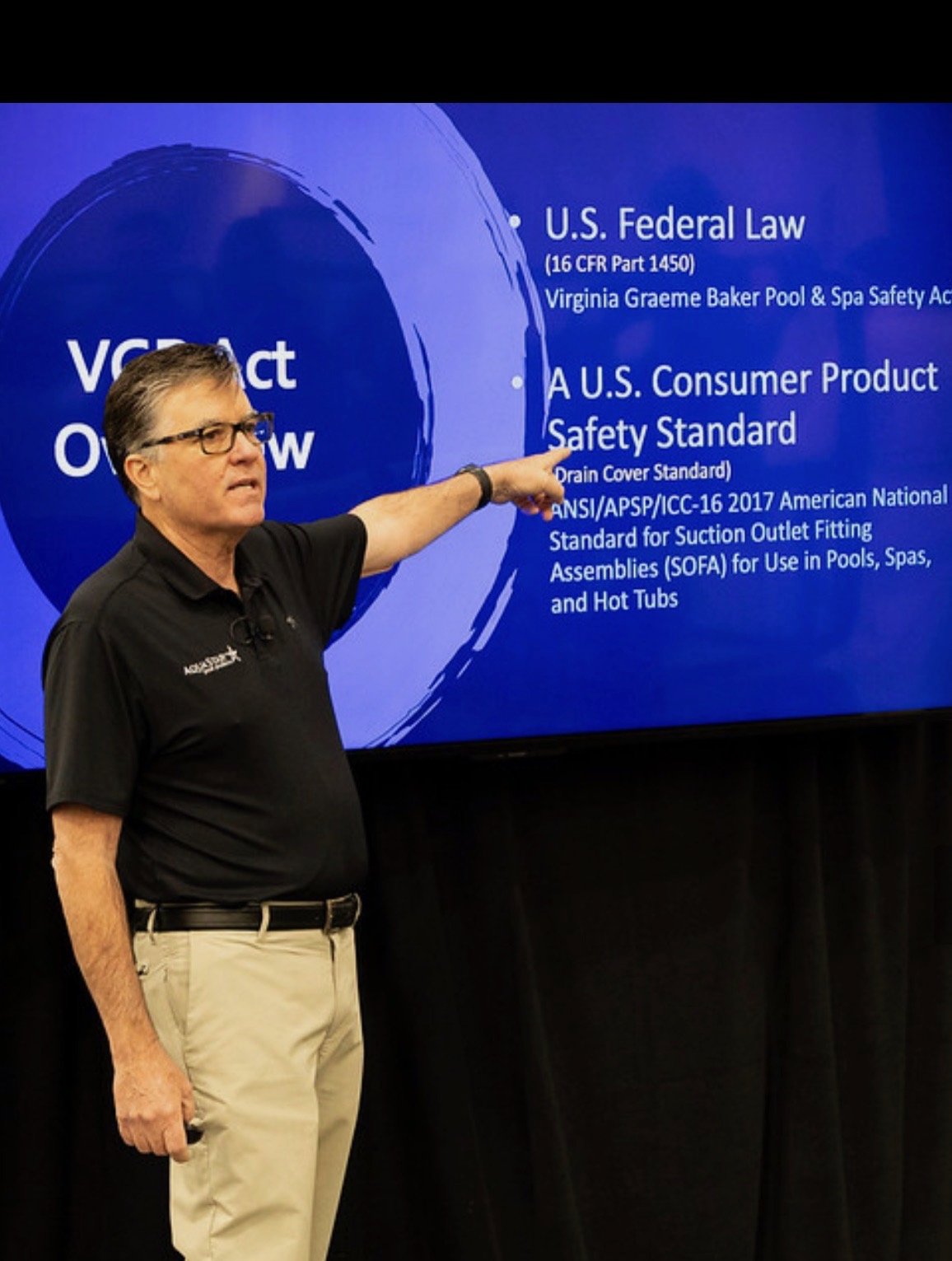
Suction entrapment is where my standards work and my field work meet most directly — drain covers, sump geometry, dual-drain configuration, and the gap between what a plan shows and what actually got built. I chair the committee that writes the VGBA standard, and I've conducted grant-funded VGBA compliance training through the DuPage County Health Department's Pool Safely program.
I also maintain ongoing primary-source research into state and local pool codes. It is not published.
Teaching
Most of what I know came from other people being willing to explain it, so I spend a fair amount of time returning the favor. I teach at Pool Nation Boot Camps alongside my AquaStar colleagues, present at industry expos and conferences, and deliver VGBA compliance training to health departments and inspectors.
The through-line is always the same: understanding the why behind a standard matters as much as knowing the standard itself. A requirement you understand is one you can apply to a situation the code never anticipated — which, on a real job site, is most of them.
Why this exists
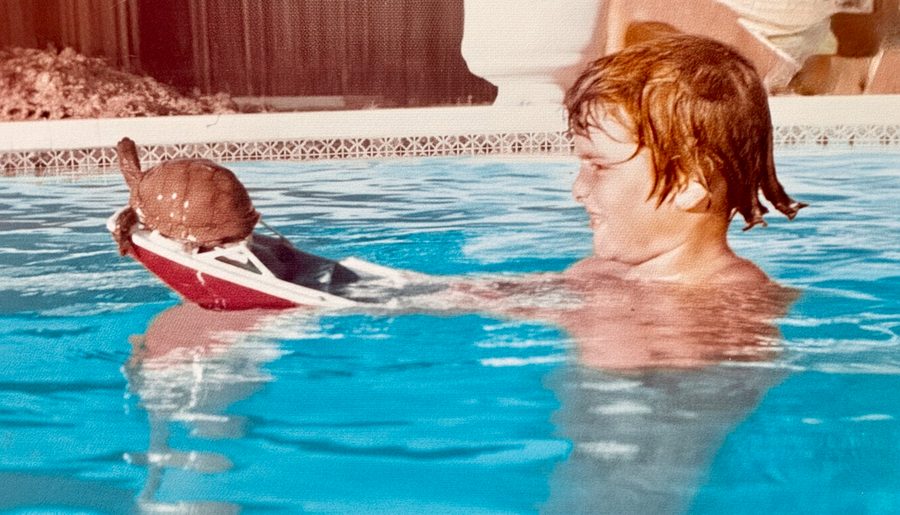
That's me in 1973, and the water has held my attention ever since. Pool Geek Guide is a personal project — not a consulting firm, not a product, not a business. It's a place to put my name to the standards work I do and the things I've learned doing it.
The pool and spa industry has given me a career built on a genuinely worthwhile problem: people should be able to get in the water and get back out again. That's the whole job.
Transparency & disclaimer
My name is Steve Barnes. I'm the Director of Science and Compliance at AquaStar Pool Products, where I work on product compliance, safety standards research, and the development of products designed to make pools safer and more efficient. That role is my professional home and the foundation for everything I do in this industry.
Through AquaStar, I'm also involved in work that extends well beyond the company itself. I serve as Chair of the PHTA-16 (VGBA) Standard Writing Committee and Chair of the PHTA Commercial Council, and from August 2005 until June 2026 I chaired the PHTA Standards Process Committee. I'm a voting member on ANSI/PHTA/ICC-2 and participate in most of the industry's drowning and injury prevention standards. I've had the privilege of conducting grant-funded VGBA compliance training through the DuPage County Health Department's Pool Safely program, and I teach at Pool Nation Boot Camps alongside my AquaStar colleagues. In 2025, the PHTA recognized this work with the Volunteer of the Year award.
I mention all of this not as a resume, but for transparency. Pool Geek Guide is not a consulting firm, not an AquaStar product, and not a competing interest. It's a personal project — the same standards knowledge, field experience, and commitment to swimmer safety that I bring to AquaStar and the PHTA, in a different format. The way my PHTA volunteer work and Pool Nation involvement complement my professional role rather than conflict with it, this site is one more way to put what I've learned to work for the industry.
Please note: anything on this site is offered for general educational purposes only. While grounded in established industry standards and professional field experience, nothing here replaces the requirement for site-specific engineering, on-site verification by a qualified professional, or compliance certification per PHTA/ICC and VGB Act standards. Views expressed here are my own and do not represent the positions of AquaStar Pool Products, the PHTA, the ICC, or any committee on which I serve.